About Abstract Solution Impact Components Technologies Gallery Videos Team Contact
Senior Project · 2026 · Computer Science

Masar

Your Masar, Your Vision.

A smart wearable navigation system empowering visually impaired individuals with real-time spatial awareness.

Scroll

01 — About Masar

What is Masar?

A wearable assistive system that closes the gap traditional mobility aids leave — detecting elevated obstacles through depth sensing, AI recognition, and haptic feedback.

Traditional mobility aids like the white cane are invaluable, yet they leave a critical gap: elevated obstacles. Signboards, tree branches, open cabinet doors, and head-level barriers often go undetected until impact.

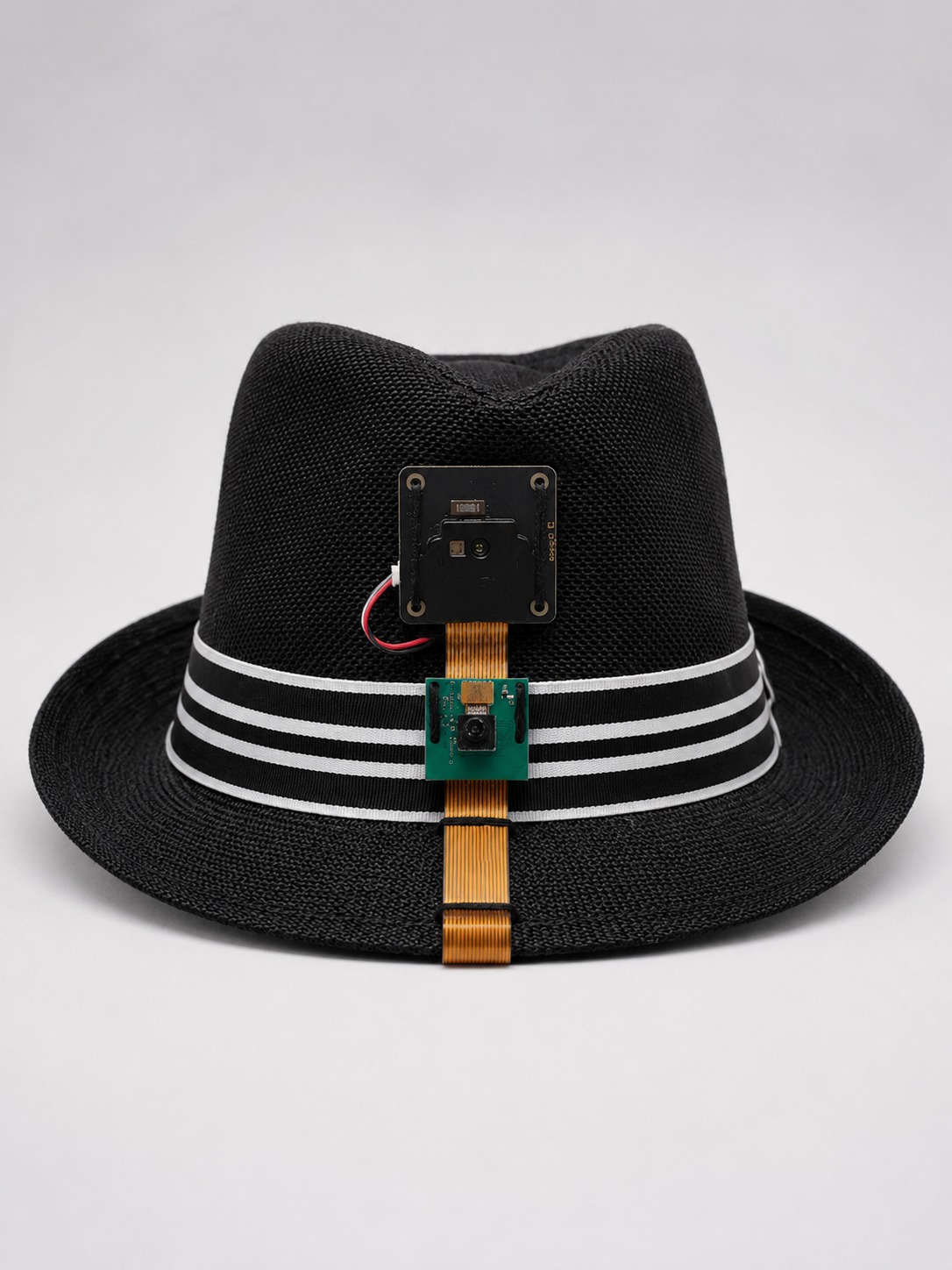
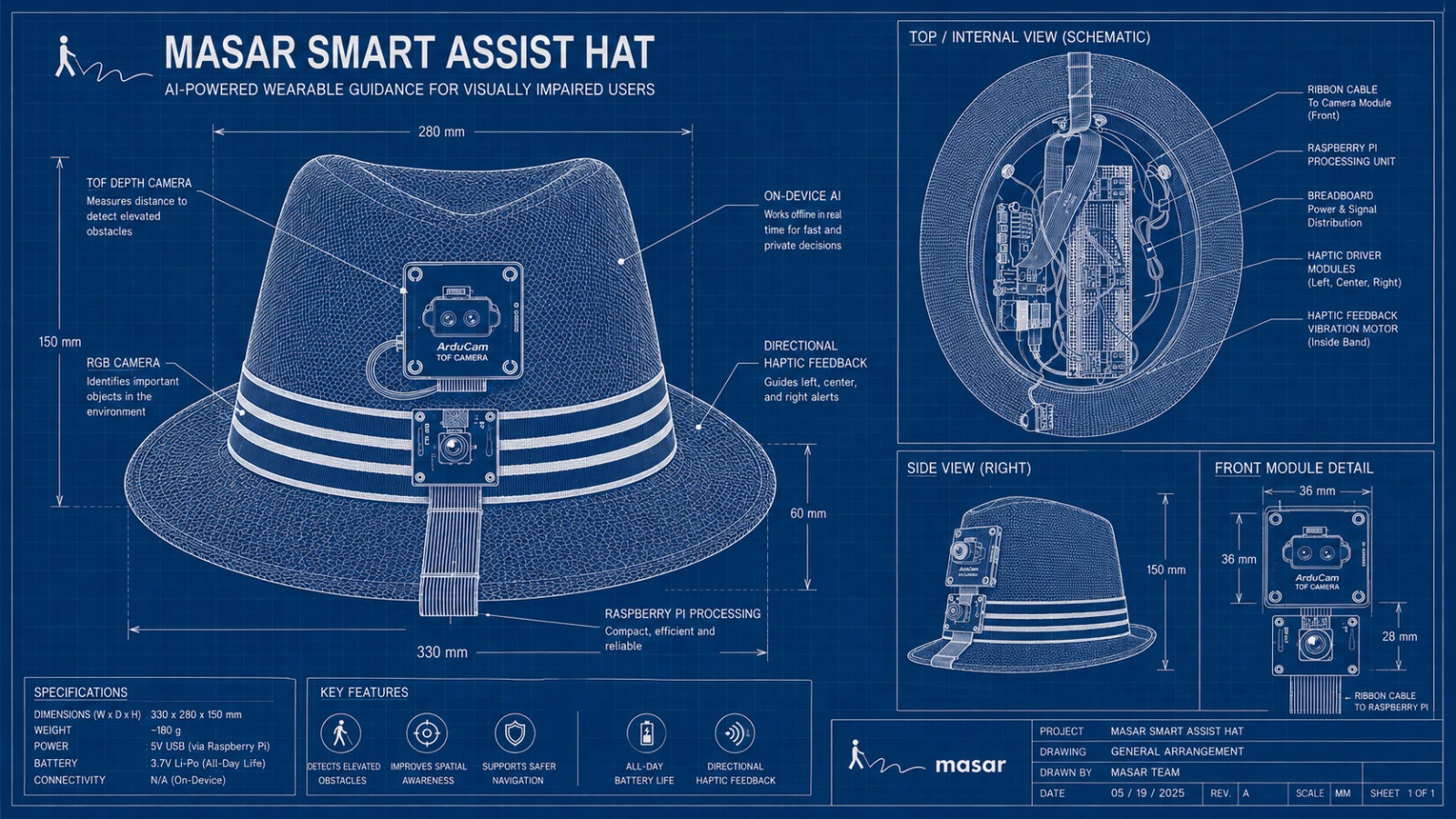
Masar fills this gap. By fusing a Time-of-Flight depth camera with an RGB vision module and directional vibration feedback, it gives users real-time awareness of the space around them — not just below their feet.

Built on the Raspberry Pi 5, Masar is designed to be lightweight, practical, and accessible — a prototype that prioritizes user safety and independence above all else.

3
Directional zones
ToF
Depth sensing
AI
Object recognition
RPi5
Processing core
Masar Prototype

02 — Abstract

The Challenge

"Visually impaired individuals may face difficulties detecting nearby, elevated, or head-level obstacles using traditional mobility tools alone. Masar proposes a wearable assistive system combining depth sensing, selected object recognition, and haptic feedback — implemented on a Raspberry Pi 5 — to improve user safety, spatial awareness, and independence through a practical, cost-conscious prototype."


03 — Proposed Solution

How Masar Works

Four integrated layers deliver a seamless, real-time navigation experience.

01

Depth-Based Detection

The ToF camera continuously measures distance to obstacles, triggering alerts before physical contact occurs.

02

Directional Haptic Feedback

Three vibration motors — left, center, right — communicate the precise direction of detected obstacles through tactile signals.

03

Object Recognition

An on-device AI model processes RGB camera frames to identify objects relevant to safe navigation.

04

Embedded Processing

All sensing, inference, and feedback is handled by the Raspberry Pi 5 — self-contained, no external connection needed.


04 — Expected Impact

Why It Matters

"Masar contributes to safer navigation, increased independence, and more inclusive assistive technology — giving visually impaired users awareness of the space around them that no cane alone can provide."

05 — Main Components

System Components

C-01
Raspberry Pi 5
Main embedded processing platform — runs inference, manages GPIO, coordinates all subsystems.
Core
C-02
Arducam Time-of-Flight Camera
Captures per-pixel depth data, measuring distance to obstacles in real time.
Sensing
C-03
RGB Camera Module
Captures color video frames for object detection and classification by the AI model.
Vision
C-04
Vibration Motors × 3
Left, center, and right motors deliver directional haptic alerts encoding obstacle position.
Output
C-05
MOSFET Driver Modules
Safely control vibration motor current using GPIO logic-level signals from the Raspberry Pi.
Control
C-06
Object Detection Model
On-device AI recognizes navigation-critical objects from the RGB camera stream.
AI

06 — Technologies Used

Tools & Technologies

Masar combines embedded hardware, programming tools, and computer vision components to build a practical assistive navigation prototype.

Raspberry Pi Logo

Raspberry Pi 5

Main processing unit for running the system, managing sensors, and controlling feedback.

Python Logo

Python

Used for system logic, sensor processing, camera handling, and AI integration.

Arducam Logo

Arducam

Used for depth sensing and visual input to support obstacle awareness.


08 — Videos

Masar Videos

Watch Masar’s elevator pitches and prototype demonstration.

Arabic Elevator Pitch

A short Arabic introduction explaining Masar’s idea and value.

English Elevator Pitch

A short English introduction presenting Masar’s purpose and solution.

Demo Video

A demonstration of Masar’s prototype and system behavior.


09 — The Team

The Team
Behind Masar

Tap a team member to view contact information and CV.

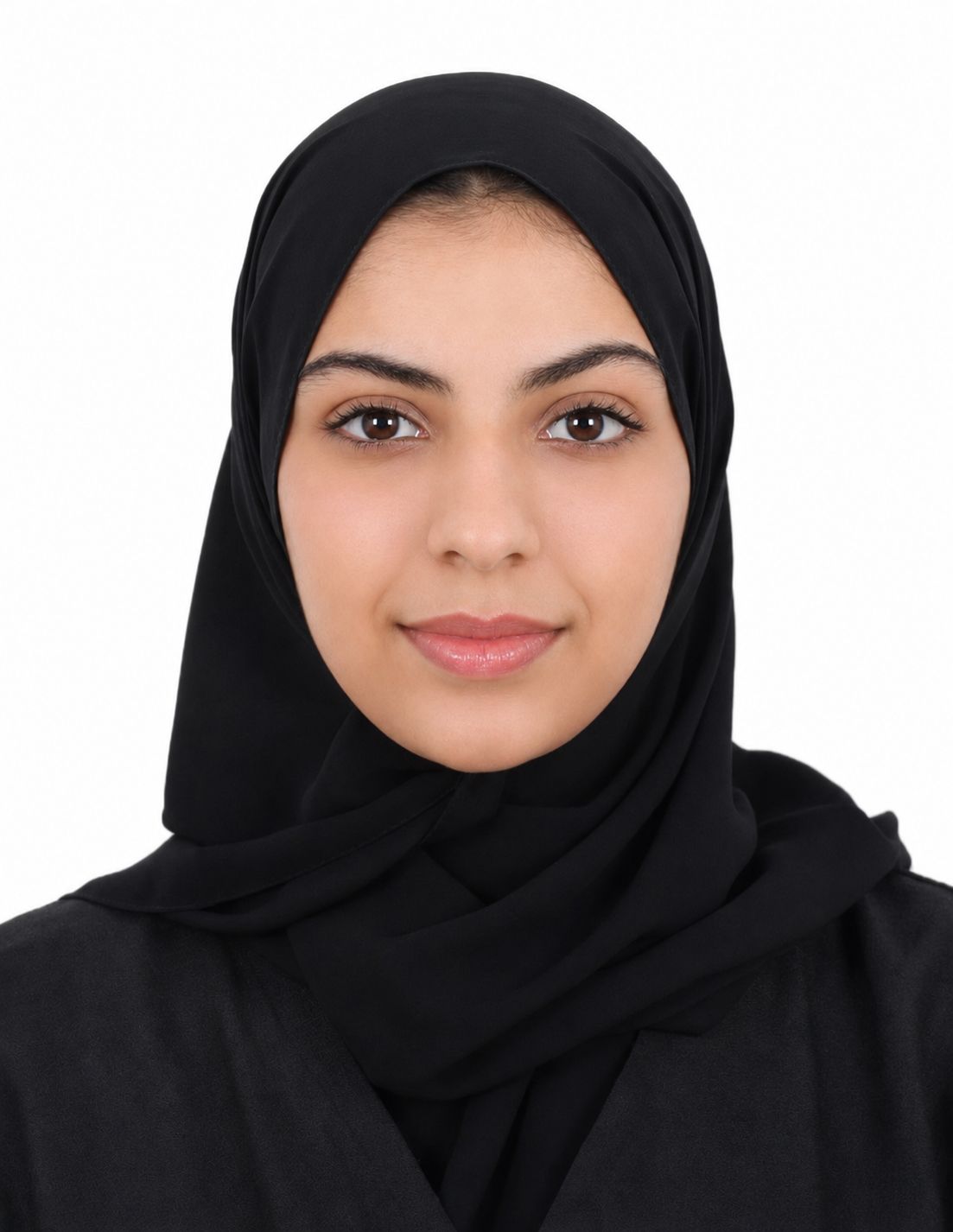
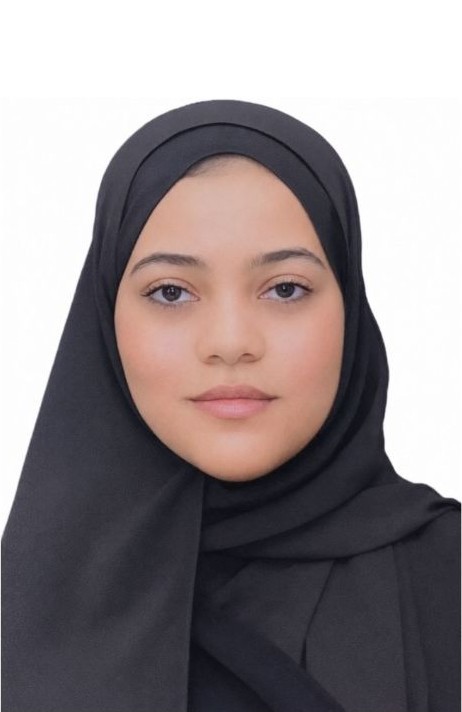
Muneera Yusuf Almuhaiza
Team Member
Muneera Yusuf Almuhaiza
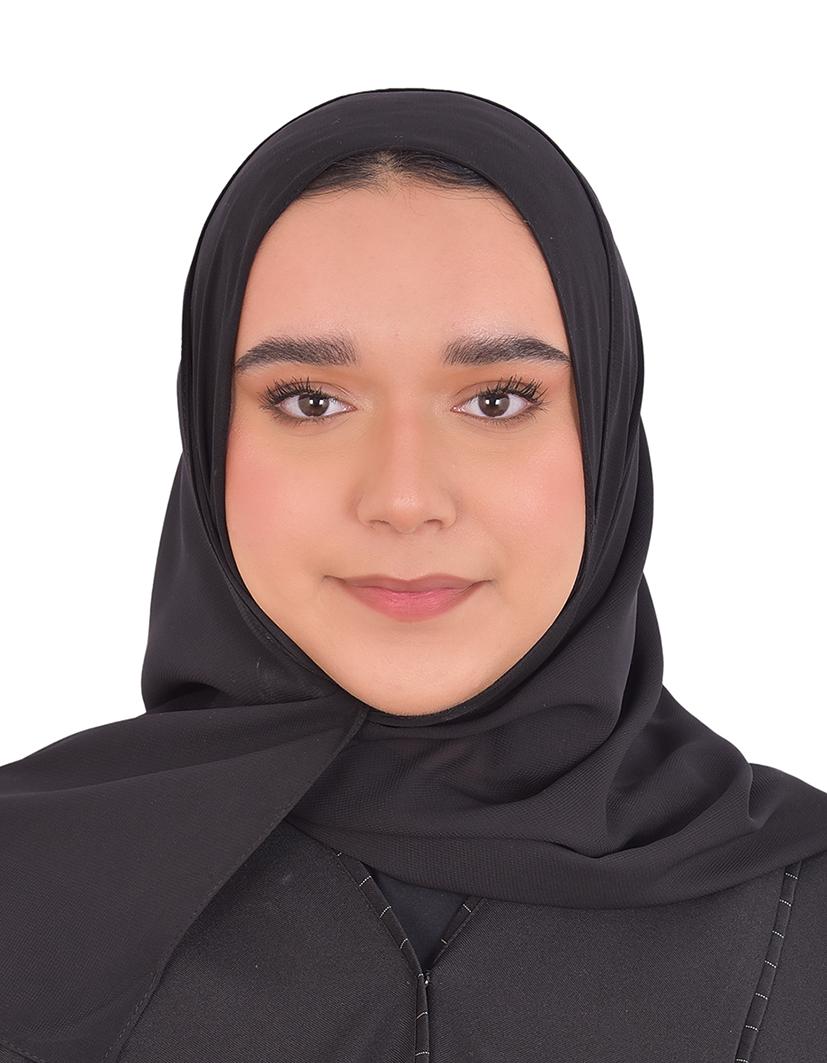
Zain Asaad Aldallal
Team Member
Zain Asaad Aldallal
Noha Idris Mahmoud
Team Member
Noha Idris Mahmoud
Academic Supervisors
Dr. Mohammed Mazin Dr. Yaqoob Alslais

10 — Contact

Project Email

For questions, collaboration, or project-related communication, please contact the Masar team through the official project email.

We welcome inquiries related to Masar, including project details, prototype information, and academic communication.